
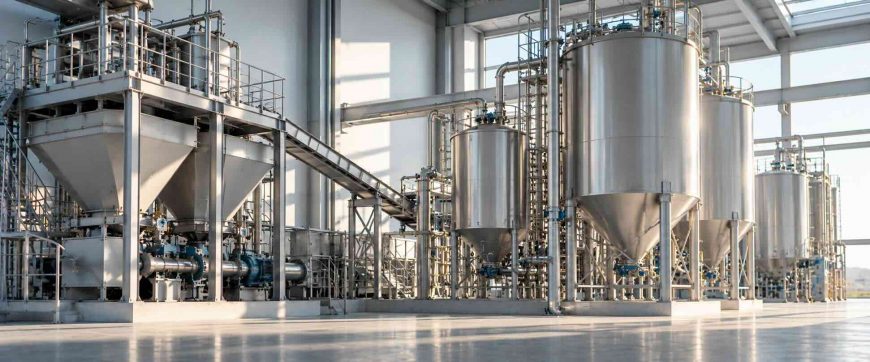
Oil Plant Manufacturing requires more than the production and installation of industrial equipment. Modern oil processing facilities must be designed as integrated systems in which process engineering, equipment selection, automation and plant layout work together to achieve reliable operation and consistent production performance.
For manufacturers processing vegetable oils and fats, the engineering challenge is to coordinate different technologies according to feedstock characteristics, production capacity and final product requirements. An integrated approach allows plant design to support operational efficiency from the earliest project stages.
Engineering Oil Plant Manufacturing as an Integrated Process
The performance of an industrial oil processing facility depends on how effectively its individual sections operate together. Seed preparation, extraction, refining and downstream processing may involve different technologies, but their operating requirements must be considered within the overall plant configuration.
Engineering decisions made during the initial design phase can influence material flow, equipment arrangement, utility consumption and future operational flexibility.
Key objectives include:
-
Coordinated process engineering and equipment selection
-
Plant layouts adapted to production requirements
-
Efficient integration of processing technologies
-
Reliable material and utility management
-
Flexible configurations for different feedstocks
This approach allows manufacturers to consider plant performance as a complete system rather than as a collection of independent machines.
From Process Design to Equipment Manufacturing
Effective plant development begins with a clear understanding of the production objectives. Feedstock characteristics, processing capacity and required product specifications influence the selection and configuration of equipment.
Technoilogy combines process engineering with equipment fabrication and procurement, coordinating technical requirements throughout the project.
Integrating these activities helps ensure that equipment specifications remain aligned with the overall process design, supporting consistency between engineering decisions and the final plant configuration.
Automation and Process Control in Oil Plant Manufacturing
Automation plays an important role in maintaining stable operating conditions across interconnected processing sections.
Integrated monitoring and control systems allow operators to manage critical process parameters, identify variations and coordinate equipment operation according to production requirements.
A modern plant configuration can incorporate:
-
Integrated process automation
-
Centralized monitoring of operating parameters
-
Coordinated equipment control
-
Flexible operating conditions
-
Process data management
These technologies support reliable plant operation while helping manufacturers respond to changes in feedstock quality and production requirements.
Equipment Integration and Plant Layout
Industrial plant performance is influenced not only by the technologies selected but also by how they are arranged and connected.
Equipment layout must consider material movement, accessibility, maintenance requirements and the integration of utilities. A coordinated engineering approach helps reduce unnecessary process complexity and supports efficient operation throughout the facility.
Careful planning during the design phase can also facilitate equipment installation, commissioning and future modifications.
From Manufacturing to Plant Start-Up
The transition from engineering to industrial operation requires coordination between equipment manufacturing, installation and commissioning.
Technoilogy provides services covering equipment fabrication and procurement, shipping, supervision of plant erection, start-up assistance and personnel training.
These activities connect the original engineering design with the practical requirements of operating an industrial facility.
Effective coordination during this phase helps manufacturers establish stable production conditions and prepare plant personnel for long-term operation.
Designing Plants for Long-Term Operational Flexibility
Oil processing facilities must often respond to changing production capacities, feedstock availability and market requirements.
Flexible plant configurations and adaptable process control can help manufacturers manage these changes without relying on a completely different production strategy.
Engineering decisions should therefore consider both immediate processing objectives and future operational requirements.
This approach supports long-term plant reliability and allows manufacturers to evaluate potential capacity increases or process modifications as production needs evolve.
Conclusion
Oil Plant Manufacturing is an integrated engineering activity in which process design, equipment fabrication, automation and plant commissioning contribute to overall production performance.
By coordinating these elements from the beginning of the project, manufacturers can develop processing facilities designed around operational reliability, efficient resource management and future production flexibility.
An integrated engineering approach transforms individual processing technologies into a coordinated industrial system capable of supporting consistent performance throughout the plant’s operating life.