
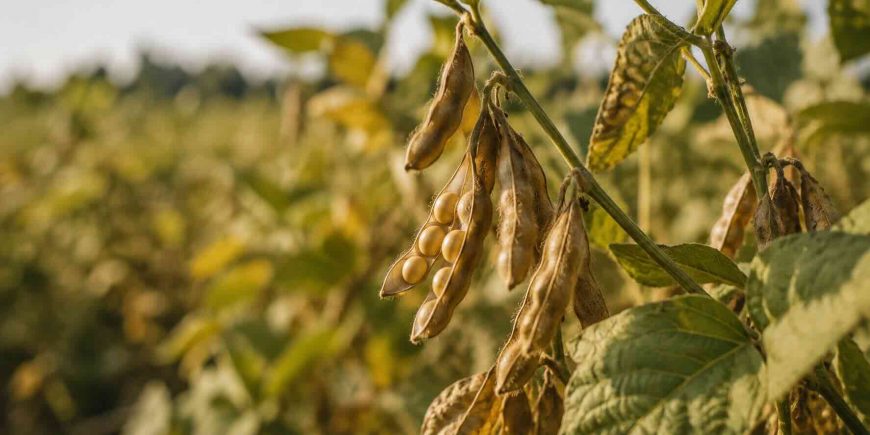
Soya Processing: Engineering for Oil and High-Value Meal Production
Soya Processing creates two strategically important product streams: vegetable oil and protein-rich meal. For this reason, the engineering of a soybean processing plant cannot focus on oil recovery alone. Seed preparation, dehulling, extraction and meal treatment must be designed as an integrated system, where decisions made upstream influence the quality and value of both outputs.
This dual-product perspective changes the way the process is optimized. The objective is not simply to maximize oil extraction, but to coordinate the complete processing route so that efficient oil recovery is achieved while preserving the characteristics required from the resulting meal.
Designing Soya Processing Around Two Product Streams
Soybeans differ from many high-oil-content seeds because the value of the meal represents a fundamental part of the processing economics. The preparation section therefore needs to create suitable conditions for extraction while also managing hulls, protein concentration and the physical characteristics of the solid material.
A well-integrated plant considers oil and meal from the beginning of the process rather than treating meal as a secondary residue generated after extraction. This approach allows the complete processing line to be engineered around the value of both product streams.
Dehulling and Preparation in Soya Processing
Preparation operations such as cleaning, cracking, dehulling, cooking and flaking determine how soybean material behaves during extraction.
Dehulling is particularly important because removing the fibrous outer fraction can support the production of meal with a higher relative protein concentration while also preparing the kernel for subsequent processing.
The preparation section can include:
- Cleaning to remove foreign material before processing
- Cracking to prepare the beans for efficient separation
- Dehulling to manage the fibrous fraction of the seed
- Conditioning and cooking to obtain suitable processing characteristics
- Flaking to increase the surface available for solvent extraction
Coordinating these operations creates suitable conditions for both efficient extraction and consistent meal production.
Solvent Extraction in Soya Processing
For industrial-scale production, solvent extraction allows efficient separation of oil from prepared soybean flakes. The extractor must provide effective contact between the solid material and the miscella while maintaining stable material flow throughout the extraction stages.
Technoilogy applies principles including total counter-current flow, controlled shallow material beds and optimized percolation and soaking. These design choices support efficient extraction while integrating the solid stream with the subsequent meal treatment section.
The extraction stage therefore represents an important connection between oil recovery and meal production rather than an isolated operation within the plant.
Meal Treatment in Soya Processing
Once the oil has been extracted, the solid stream still requires dedicated processing. Meal desolventizing, toasting, drying and cooling form an integral part of the solvent extraction plant and must be coordinated with extractor operation.
The objective is to remove residual solvent and bring the meal to appropriate conditions for handling and further use. Considering these operations together with extraction allows the plant to manage oil and meal as parallel products generated by the same integrated process.
Managing Hulls and Meal as Valuable Outputs
Soya Processing also creates opportunities for structured management of the hull fraction. Technoilogy includes both husk pelletizing and meal pelletizing among the technologies that can be integrated into seed preparation and extraction projects.
This broader plant perspective supports efficient handling of the different solid streams and reinforces the principle that soybean processing should be engineered around complete raw-material utilization rather than oil production alone.
Integrated Engineering for Soya Processing Plants
The performance of a soybean processing facility depends on the interaction between preparation, extraction, meal treatment and solvent recovery.
Optimizing a single section independently can create limitations elsewhere in the process, while integrated engineering helps maintain consistent material characteristics and stable operating conditions across the complete plant.
Key objectives include:
- Coordinated seed preparation and extraction
- Efficient oil recovery from soybean flakes
- Integrated desolventizing, toasting, drying and cooling
- Structured management of meal and hull streams
- Plant configurations designed around both oil and solid products
This integrated approach allows the different processing stages to operate as parts of a single production system.
Conclusion
Modern Soya Processing is best understood as a dual-value production system. Soybean oil and meal are generated through the same processing chain, and the quality and efficiency of both depend on how preparation, dehulling, extraction and meal treatment are engineered together.
By integrating these operations within a coordinated plant design, manufacturers can support efficient oil recovery, effective management of meal and hull streams and consistent overall processing performance.