
Logo
  • Home
  • About Us
    • Who we are
    • Our workshop
    • Engineering
    • Our Team
    • Our Offices
      • Branch Offices
      • Representative Offices
    • Our partners
  • Our Technologies
    • Oilseed Extraction
    • Oil Refining
    • Dry Fractionation Plant
    • Oleochemicals
    • Biodiesel
    • Waste Oil Pre-treatment
    • Lube Oil Re-refining
  • R & D
  • Our services
  • Plants
  • Media
    • News
    • Technoilogy Talks
    • Conferences & Exhibitions
    • Insights
    • Video
  • Contact us
image
  • Home
  • About Us
    • Who we are
    • Our workshop
    • Engineering
    • Our Team
    • Our Offices
      • Branch Offices
      • Representative Offices
    • Our partners
  • Our Technologies
    • Oilseed Extraction
    • Oil Refining
    • Dry Fractionation Plant
    • Oleochemicals
    • Biodiesel
    • Waste Oil Pre-treatment
    • Lube Oil Re-refining
  • R & D
  • Our services
  • Plants
  • Media
    • News
    • Technoilogy Talks
    • Conferences & Exhibitions
    • Insights
    • Video
  • Contact us
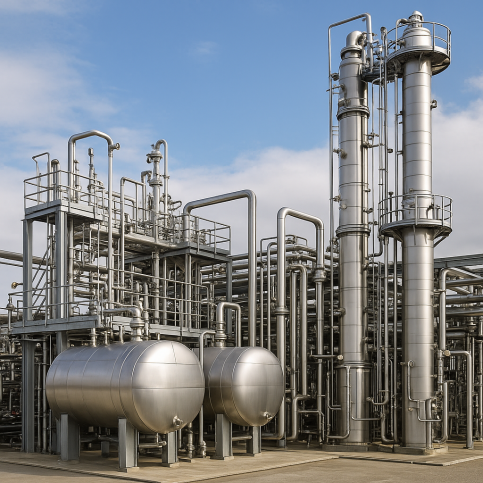
Biodiesel purification and glycerine distillation facility with stainless steel tanks and columns under daylight
  • 29 Settembre 2025 by Technoilogy
  • Insights, News

Biodiesel Purification & Glycerine Distillation: From By-Product to Value Chain

Biodiesel Purification & Glycerine Distillation: From By-Product to Value Chain

Biodiesel production does not end with transesterification: to meet international standards (EN 14214, ASTM D6751) and ensure reliable engine performance, the fuel must undergo a careful stage of biodiesel purification. In parallel, glycerine distillation transforms a by-product – crude glycerol – into a valuable resource for pharmaceutical, cosmetic, food, and fine chemical industries. This article provides an in-depth analysis of typical impurities in crude biodiesel, the most common purification techniques (water washing, dry washing, membrane separation), strategies for glycerine distillation, and opportunities for value creation across the supply chain.

Why Biodiesel Purification is Essential

Insufficiently purified biodiesel carries technical risks (filter clogging, corrosion, deposits), economic risks (reprocessing, product recalls), and regulatory risks (non-compliance). The goals of biodiesel purification are:

  • Remove residual catalysts (NaOH/KOH or acids), soaps, and salts.
  • Eliminate free glycerol and unreacted monoglycerides/diglycerides.
  • Separate methanol and water to comply with flash point and stability limits.
  • Reduce traces of metals and suspended solid contaminants.
  • Stabilize biodiesel against oxidation and cold flow issues (with additives if needed).

The expected outcome is a FAME product compliant with standards, with key parameters such as total/free glycerol, acid value, water content, total contamination, and oxidative stability within the required ranges.

Typical Impurities in Crude Biodiesel

The feedstock and process design strongly influence impurity profiles. After transesterification and glycerine phase separation, crude FAME typically contains:

  • Residual alcohol (mainly methanol): lowers flash point, increases volatility and safety risks.
  • Catalysts and soaps: soaps form from base reaction with FFA; cause emulsions and phase losses.
  • Free glycerol and mono/diglycerides: impair filterability and cause deposits.
  • Water: promotes hydrolysis, free fatty acid formation, and corrosion.
  • Solid matter in suspension: residual filter aids, adsorbents, dust, particulates.
  • Trace metals (Na, K, Ca, Mg) and phosphorus: affect emissions, downstream catalysts, and compliance.

Biodiesel Purification Techniques

There is no universal purification method: the choice depends on feedstock, catalyst type, target quality, CAPEX/OPEX balance, and available utilities. The three main families are water washing, dry washing, and membrane separation; hybrid sequences are often adopted to maximize both yield and quality.

Water Washing

The most traditional and widespread method. Crude FAME is contacted with water (often warm) to extract soluble catalysts, soaps, methanol, and glycerol. It can be applied as mist wash (light spraying/agitation) or bubble wash (sparging). Typical steps include:

  1. First wash to remove most soaps and methanol.
  2. Second/third washes for polishing (until conductivity/transparency targets are met).
  3. Water/FAME separation and drying (stripping, vacuum, hot air) to reduce water to compliant levels.

Pros: simple, basic equipment, efficient on hydrophilic species.
Cons: high water use, effluent generation (requires treatment), risk of emulsions and FAME losses if soap levels are high.
Best practice: light acid wash (citric/phosphoric) to “break” soaps before water wash, reducing emulsions.

Dry Washing

A “dry” alternative based on adsorbents (ion exchange resins, magnesium silicate, activated clays). FAME flows through columns/filters where impurities are retained. Can be single-pass or multi-stage with mixed media.

  • Pros: no wastewater, compact layout, more stable continuous processes, fewer emulsions.
  • Cons: adsorbent cost and management, robust filtration needed, risk of channeling and media saturation.

Often followed by a polishing stage (fine filters, coalescers) and methanol recovery/stripping.

Membrane Separation

Membrane technologies (micro/ultra/nanofiltration) separate species by size/charge. In biodiesel purification they are used to reduce free glycerol, soaps, water, and solids. They can reduce the use of water and adsorbents but require careful fouling control and effective CIP cleaning systems.

Hybrid Sequences and Optimization

Many plants adopt hybrid trains such as: acid crack → minimal water wash → dry polish → methanol stripping. Optimization levers include:

  • Upstream FFA control (pretreatment) to limit soap formation.
  • Adsorbent dose/contact time and filter bed quality.
  • Methanol management (energy-efficient recovery, recycle into reaction).
  • Vacuum drying at low temperature to preserve stability.

Critical Quality Parameters (Post-Purification)

To declare the product compliant, QC laboratories monitor key indicators after biodiesel purification:

  • Total and free glycerol (EN/ASTM limits).
  • Monoglycerides/diglycerides (indicative of incomplete conversion).
  • Acid value (residual FFA) and iodine number.
  • Water content and sediments/particulates.
  • Metals (Na, K, Ca, Mg), phosphorus, sulfur.
  • Oxidative stability (Rancimat) and cloud point/CFPP.

Methanol Management and Safety

Residual methanol must be reduced below regulatory thresholds for flash point and safety. Strategies include stripping (steam/inert gas), recycle columns, and recovery for reuse in transesterification. ATEX systems, vapor detection, and ventilation procedures are integral to process engineering.

Glycerine: By-Product or Opportunity?

The heavy phase of transesterification contains glycerine (glycerol), methanol, soaps, and impurities. Value is created through neutralization, clarification, concentration, and finally glycerine distillation to obtain technical, USP/Ph.Eur., and food/cosmetic grades. Purified glycerine is used as:

  • Humectant and solvent in cosmetics and personal care.
  • Food additive (E422) and pharmaceutical excipient.
  • Intermediate for propylene glycol, resins, and plasticizers.

Typical Glycerine Processing Line

  1. Neutralization: remove catalyst, convert soaps to FFA (then separated).
  2. Separation/clarification of salts and coarse impurities (decanting, centrifugation).
  3. Evaporation: remove methanol and water (recover methanol).
  4. Bleaching/filtration (if required) to improve color.
  5. Vacuum distillation (often multi-effect, thin-film, or molecular distillation) to achieve purities >99.5%.

Plant design balances target purity, energy use, fouling risks, and thermal stability. Thin-film configurations reduce thermal degradation and improve product quality.

Glycerine Grades and Specifications

  • Crude glycerine (60–85%): destined for further processing or low-value technical uses.
  • Technical grade (≥95%): for paints, resins, antifreeze, lubricants.
  • USP/Ph.Eur./Food grade (≥99.5%): cosmetics, pharmaceuticals, food.

Correct glycerine distillation is decisive for accessing premium markets.

Markets and Applications of Purified Glycerine

Demand for high-quality glycerine is growing in cosmetics, sanitizers, pharmaceuticals, and food. Trends include:

  • Personal care formulations requiring safe, natural humectants.
  • Production of bio-based propylene glycol as a green substitute.
  • Use in alkyd resins, plasticizers, and eco-friendly lubricants.

Comparative Overview: FAME Purification Techniques

Technique Pros Cons Best Fit
Water washing Simple, effective on hydrophilic species Water use, effluents, risk of emulsions Small/medium plants, limited CAPEX
Dry washing No wastewater, continuous, stable Adsorbent cost, filter/column management Medium/large plants, steady demand
Membranes Low water/adsorbent use Fouling, higher CAPEX, CIP management When OPEX/environmental performance is priority

Integration, Sustainability & Energy

Purification affects both energy and water use. Best practices to reduce footprint include:

  • Heat recovery from stripping/evaporation for preheating.
  • Closed-loop water and effluent treatment for reuse.
  • Choice of regenerable adsorbents or minimized consumption.
  • Optimized vacuum/temperature in glycerine distillation.

Quality, Testing & Compliance

The QC laboratory is the “gatekeeper” of quality. Beyond FAME parameters, glycerine must be tested for heavy metals, solvent residues, color, and odor. Rapid methods (FTIR, GC, HPLC) and statistical sampling plans minimize non-conformity risks. Digital traceability and batch genealogy are increasingly required in audits.

Recurring Problems & Troubleshooting

  • Persistent emulsions in water wash: reduce soaps via acid crack, lower agitation, increase settling time, use proper demulsifiers.
  • High methanol in FAME: improve stripping, verify temperatures/flow, check recycle systems.
  • High free glycerol: balance MeOH:oil ratio, conversion, phase separation, and polishing.
  • Clogged filters in dry wash: verify media granulometry, surface velocity, prevent channeling.
  • Poor glycerine purity in distillation: review vacuum levels, ΔT, heating profile, reflux, and heat exchanger cleanliness.

Innovations 2025 and Beyond

  • Hybrid adsorbents (silicates + activated carbon) with higher capacity and lower consumption.
  • New selective membranes less prone to fouling, with faster CIP.
  • Thin-film evaporators and short-path distillation for higher-quality glycerine with less thermal damage.
  • Advanced process control (in-line sensors, predictive models) for real-time quality and reduced waste.

Plant Integration Strategies

The best biodiesel purification comes from integrated design of reaction, separation, and utilities:

  • Integrated methanol recovery (single column with side-draw to minimize losses).
  • Continuous dry wash with parallel columns for media change/regen without downtime.
  • CIP lines and bypasses designed to minimize downtime.
  • Glycerine distillation with integrated heat recovery.

By-Product Valorization

Beyond glycerine, purification generates streams with added value:

  • FAD (fatty acid distillates) and FFA from acid crack: useful in oleochemicals, soaps, lubricants, or as co-feed for renewables (HVO/SAF).
  • Spent solids (clays/adsorbents): potential oil recovery and regulated reuse.
  • Wash water: treated and reused on site or for utilities (where permitted).

Economics: CAPEX, OPEX & TCO

The choice of purification line and glycerine distillation strongly impacts total cost of ownership:

  • Water wash: low CAPEX, OPEX tied to water, drying energy, effluent treatment.
  • Dry wash: medium CAPEX, OPEX on adsorbents; benefits on footprint and operational stability.
  • Membranes: medium/high CAPEX, OPEX on cleaning and replacement; savings on water/effluents.
  • Glycerine distillation: significant investment, but attractive payback if accessing premium markets.

A techno-economic assessment based on feedstock, scale, and target markets is indispensable for optimal choice.

Conclusion

Biodiesel purification is the bridge between transesterification and a reliable, compliant, competitive final product. In parallel, glycerine distillation turns a by-product into a strategic asset, increasing value across the chain. With the right technology mix (water vs dry vs membrane), integrated energy design, and strict QC, producers can reduce operating costs, improve sustainability, and open new high-margin markets.

For a full overview – from transesterification to market trends and plant technologies – read the complete guide on biodiesel production: Biodiesel Production: Processes, Technologies & Market Outlook 2025.

Want to explore the complete biodiesel cycle – processes, technologies, and market outlook?

Read the full guide to Biodiesel Production

Insights, News

Navigazione articoli

prev article
next article
Categorie
  • Conferences & Exhibitions
  • Insights
  • News
  • Technoilogy Talks

Who we are

TECHNOILOGY, a story of over 65 years of excellence and expertise. TECHNOILOGY is an international engineering company specialized in the design and manufacturing of plants for Edible Oils, Oleochemicals and Biodiesel production.
get in touch
Logo
  • China
  • Canada
  • Russia
  • Germany

Our News

  • Modern biodiesel production facility during daytime showing stainless steel transesterification reactors, distillation columns, and storage tanks under sunlight.

    Advanced Transesterification Techniques in Biodiesel Production: Catalysts, Reactors & Efficiency Gains Advanced transesterification is the foundation of modern biodiesel production—an engineered chemical transformation that converts renewable oils and fats into fatty acid methyl esters (FAME). With growing energy demand and tighter sustainability targets, the biodiesel sector is shifting from conventional batch chemistry toward continuous, high-efficiency systems. This article explores the evolution of transesterification technologies, advanced catalysts, and process optimizations that drive yield, purity, and scalability in 2025. Understanding the Chemistry of Transesterification Transesterification is a reversible chemical reaction between a triglyceride (the main component of vegetable oils or animal fats) and an alcohol—most commonly methanol—under the influence of a catalyst. The result is a mixture of FAME (biodiesel) and glycerol as a by-product: Triglyceride + 3 Methanol ⇌ 3 Methyl Ester (Biodiesel) + Glycerol The process is governed by equilibrium dynamics, meaning that reaction efficiency depends on several factors: Methanol-to-oil molar ratio – Typically 6:1 for optimal conversion; higher ratios shift equilibrium but require downstream methanol recovery. Catalyst type and concentration – Determines reaction kinetics and selectivity. Reaction temperature and mixing – Affects rate and phase contact between oil and methanol. Feedstock quality – Presence of free fatty acids (FFA) and water can deactivate catalysts and form soaps. In industrial biodiesel production, reaction times are minimized (20–90 minutes) by optimizing these parameters and using intensified reactors that improve mass transfer between the immiscible phases. Homogeneous Catalysis: The Traditional Backbone For decades, homogeneous base catalysts—such as sodium hydroxide (NaOH) and potassium hydroxide (KOH)—have dominated the biodiesel industry due to their low cost and fast kinetics. They dissolve readily in methanol, forming an active methoxide ion (CH₃O⁻) that attacks the carbonyl group of triglycerides, yielding methyl esters. Process Overview The homogeneous alkaline process is typically conducted at 55–65°C, near the boiling point of methanol, and at atmospheric pressure. The reaction sequence involves: Mixing refined oil or fat with methanol and dissolved catalyst. Maintaining constant agitation to maximize phase contact. Allowing the reaction to reach 95–98% conversion within 1 hour. Settling or centrifuging to separate biodiesel (upper phase) and glycerol (lower phase). Advantages Simple setup and well-established process design. Fast reaction rate and high conversion for low-FFA feedstocks. Suitable for continuous and batch operation modes. Limitations Sensitive to free fatty acids (FFA) and water, which react with the catalyst to form soaps. Soap formation leads to emulsions, reducing phase separation and yield. Requires extensive washing and purification to remove catalyst residues and soaps. Limited reusability of catalyst and higher environmental impact from wastewater. Despite these drawbacks, homogeneous catalysis remains economically viable for clean feedstocks like refined soybean or canola oil. However, as the industry embraces waste oils and animal fats with higher FFA content, alternative catalyst systems have become essential. Acid-Catalyzed Transesterification Acid catalysts—typically sulfuric acid (H₂SO₄) or hydrochloric acid (HCl)—are slower but more tolerant to impurities. They can simultaneously catalyze esterification of FFAs and transesterification of triglycerides, making them suitable for low-cost feedstocks. Typical conditions include 1–2% acid catalyst, temperatures of 55–70°C, and longer reaction times (2–6 hours). The trade-off lies between flexibility and kinetics: while acids handle impurities better, they are slower and more corrosive, requiring stainless steel or lined reactors. Applications Pre-esterification step for high-FFA feedstocks prior to base-catalyzed transesterification. Direct acid transesterification in integrated systems where water and FFA content are controlled. Challenges High methanol-to-oil ratios (up to 20:1) required to shift equilibrium. Formation of emulsions and need for neutralization post-reaction. Corrosion and safety concerns due to acidic environment. Recent process intensification methods—such as ultrasound-assisted acid catalysis and microwave heating—are overcoming these limitations, enabling faster kinetics even at moderate temperatures. Transition to Advanced Catalysis To improve sustainability, modern biodiesel plants are moving toward heterogeneous and enzymatic catalysts that allow continuous operation, catalyst reusability, and lower purification requirements. The shift also supports the use of non-edible and waste feedstocks, aligning with circular economy principles. These advanced transesterification systems minimize chemical waste, simplify downstream purification, and achieve higher overall lifecycle efficiency. They represent the next generation of biodiesel process engineering—bridging economic and environmental performance. Heterogeneous Catalysts: Toward Cleaner and Reusable Systems Heterogeneous catalysis employs solid catalysts that remain in a separate phase from reactants, allowing easy recovery and reuse. Common materials include metal oxides (CaO, MgO, ZnO), zeolites, and supported catalysts on silica or alumina. Unlike homogeneous systems, these catalysts eliminate the need for neutralization and water washing, producing cleaner biodiesel with lower waste generation. Reaction design focuses on surface area, porosity, and active site accessibility to ensure high conversion rates even for viscous feedstocks. We’ll explore their mechanisms, reactor design, and industrial implementation in the next section. Heterogeneous Catalysis: From Concept to Industrial Scale In modern biodiesel plants, heterogeneous catalysts have become the preferred route for advanced transesterification. These catalysts offer simple separation, high recyclability, and lower wastewater generation, aligning with green chemistry principles. Unlike liquid bases or acids, heterogeneous catalysts remain solid throughout the process, simplifying downstream purification. Common Catalyst Families Alkaline earth metal oxides – Calcium oxide (CaO) and magnesium oxide (MgO) are among the most widely studied. They are inexpensive, non-toxic, and easily recoverable, but require feedstocks with low moisture and FFA content to prevent deactivation. Transition metal oxides – Zinc oxide (ZnO), titanium dioxide (TiO₂), and zirconia (ZrO₂) provide better stability under humid conditions and can be functionalized for higher activity. Supported catalysts – Active components (K₂O, Na₂O, CaO) dispersed on porous supports such as alumina, silica, or zeolites to increase surface area and mechanical strength. Hydrotalcite and mixed oxides – Double-layered hydroxides offering tunable basicity and enhanced thermal stability, useful for continuous fixed-bed reactors. Advantages of Heterogeneous Catalysis Easy catalyst recovery and reuse (up to 10 cycles in optimized systems). Reduced environmental impact due to absence of neutralization and washing steps. Higher product purity and simplified biodiesel purification. Potential for continuous operation with fixed-bed reactors. Challenges and Solutions Despite their advantages, heterogeneous catalysts face deactivation through leaching, poisoning, and sintering. Engineers address these issues by: Employing pre-treated feedstocks with low FFA and water content. Read more

    Read more
  • Modern fatty acid distillation and fractionation plant with stainless steel columns and condensers under operation

    Fatty Acid Distillation & Fractionation: Core Processes in the Oleochemical Industry Fatty acid distillation lies at the heart of modern oleochemical production. From soap and surfactant manufacturing to lubricants, cosmetics, and biodiesel, fatty acid purity determines both product performance and process efficiency. This article explores how distillation and fractionation transform natural fats and oils into high-value oleochemical intermediates, combining chemistry, process design, and sustainability in one of the most dynamic industrial sectors. The Role of Fatty Acid Distillation in the Oleochemical Value Chain In the oleochemical industry, fatty acids are the cornerstone molecules—derived from the splitting and purification of natural triglycerides such as palm oil, tallow, coconut oil, or rapeseed oil. Their properties—chain length, degree of saturation, and purity—dictate downstream applications ranging from surfactants to pharmaceutical-grade esters. Fatty acid distillation is the critical step that refines crude fatty acid mixtures into individual fractions with well-defined boiling points and purity profiles. It ensures color stability, low odor, and compliance with specifications such as iodine value, acid value, and unsaponifiable content. Feedstocks for Oleochemical Production The efficiency of fatty acid distillation begins with the choice of feedstock. Common sources include: Palm oil and palm kernel oil – high yield, diverse chain distribution (C8–C18), excellent for soap and detergent bases. Coconut oil – rich in medium-chain fatty acids (C8–C12), ideal for surfactants and personal care products. Tallow – high in long-chain saturated fatty acids (C16–C18), used in candles, lubricants, and industrial greases. Rapeseed and soybean oils – higher unsaturation; suited for esters, lubricants, and plasticizers. Each feedstock determines the design of the distillation column, the operating pressure, and the condensation system. For instance, palm-based mixtures require higher thermal load due to the heavier fraction profile, while coconut oil fractions demand tight control of low-boiling components. Fat Splitting: The Precursor to Distillation Before distillation, triglycerides must be split into fatty acids and glycerine through a process known as fat splitting or hydrolysis. This reaction takes place under high temperature (240–270°C) and high pressure (50–60 bar), typically in continuous fat-splitting columns using water as the reactant. The chemical equation can be summarized as: Triglyceride + 3 H₂O → Glycerol + 3 RCOOH (Fatty acids) Modern continuous splitting units achieve conversions above 98%, generating a crude fatty acid mixture and crude glycerine. The fatty acid stream is then dehydrated and sent to the distillation section for purification and color removal. Principles of Fatty Acid Distillation Fatty acid molecules have boiling points ranging from 200°C to 400°C under atmospheric conditions, making direct distillation impractical. Therefore, the process is conducted under deep vacuum (2–10 mbar), which drastically lowers boiling temperatures and minimizes thermal degradation. The typical vacuum distillation system consists of: A feed preheater (often shell-and-tube or scraped surface) to reach 150–200°C before entering the column. A packed or tray column operated under vacuum, ensuring controlled separation of light and heavy fractions. A reboiler (often steam or hot-oil heated) providing vaporization energy. Condensers for each fraction stage, maintaining temperature gradients to condense specific fatty acids. A vacuum generation system (steam ejectors or liquid ring pumps) maintaining stable low pressure. Depending on the number of fractions required, the system can be designed as a single-stage or multi-stage distillation unit. Multi-stage systems allow better separation of components such as lauric acid, myristic acid, palmitic acid, and stearic acid, each with unique applications. Thermal Design and Operating Parameters To maintain product integrity and minimize decomposition, the following parameters are carefully optimized: Temperature: typically 180–240°C for light fractions and up to 270°C for heavy cuts. Pressure: ultra-low vacuum, 2–8 mbar, to prevent cracking and discoloration. Residence time: less than 1 minute in high-performance short-path evaporators or wiped film distillers. Feed quality: moisture <0.05% and minimal soap content to avoid foaming. Modern distillation systems employ wiped-film or molecular distillation technologies to achieve top purity levels (>99%) with reduced color and odor. These systems ensure gentle evaporation under extremely short residence times, making them ideal for heat-sensitive fatty acids like oleic and linoleic acids. Color and Odor Control Color stability and odor are key quality indicators in the oleochemical refining chain. Fatty acids may darken or develop unwanted odors due to oxidation or polymerization at high temperatures. To counteract this, process engineers integrate: Steam stripping to remove volatile impurities and odor bodies. Bleaching earths or activated carbon treatments prior to distillation. Deodorization units post-distillation for cosmetic and pharmaceutical-grade applications. With proper control, color values (Lovibond scale) below 3.0 and acid values within specification can be achieved, ensuring premium quality fatty acids suitable for high-end formulations. Fractionation: Beyond Purification While fatty acid distillation focuses on removing impurities and achieving purity, fractionation separates fatty acid mixtures into precise cuts based on chain length and degree of unsaturation. This step enables manufacturers to customize product properties for specific applications. There are three main types of fractionation used in oleochemical production: Distillation fractionation – separates based on boiling points under vacuum. Crystallization fractionation – separates saturated from unsaturated fatty acids via controlled cooling. Solvent fractionation – uses selective solvents (acetone, ethanol) to crystallize specific fractions. Each method has trade-offs in terms of purity, yield, and energy consumption. For instance, crystallization is highly selective and energy-efficient but slower, while distillation offers faster throughput and continuous operation. Vacuum System and Energy Integration The vacuum system is a key enabler of fatty acid distillation performance. Stable pressure ensures consistent separation and product color. Industrial setups use multi-stage steam ejectors or hybrid vacuum systems (steam ejector + liquid ring pump) to achieve pressures below 5 mbar. Energy recovery systems often integrate: Heat exchangers recovering energy from hot condensate streams. Thermal oil systems recycling heat between evaporators and reboilers. Vacuum condensers with multi-effect design to reduce steam consumption. This energy integration is essential to improving overall plant efficiency and sustainability, often resulting in up to 25% reduction in specific energy use. Feedstock-Specific Behavior During Distillation Different natural oils behave differently under distillation and fractionation conditions: Palm-based feedstocks produce a wide range of C12–C18 acids, requiring multi-stage distillation columns for precise cuts. Coconut Read more

    Read more
  • Night-time edible oil bleaching facility with illuminated stainless steel tanks and filtration systems

    Bleaching in Edible Oil Refining: Clays, Process Optimization & Quality Standards Edible oil bleaching is a critical stage in the refining of edible oils, designed to remove unwanted pigments, polar impurities, and trace contaminants that compromise the quality, stability, and commercial value of the final product. In an increasingly demanding market, bleaching is not just a cosmetic treatment to improve oil color, but an advanced technology that directly affects shelf life, operational efficiency, and regulatory compliance. History and Evolution of Bleaching The bleaching of vegetable oils dates back to the 19th century, when natural clays were used to clarify oils intended for food use. With the growth of the food industry and the introduction of international purity standards, bleaching evolved from an empirical practice into a sophisticated engineering process. In the 1970s–80s, the introduction of acid-activated bleaching clays dramatically improved the removal of phospholipids, pigments, and metals, enabling industrial refining to achieve unprecedented quality levels. Today, bleaching is no longer seen as an isolated step, but as part of an integrated ecosystem that includes degumming, neutralization, deodorization, and fractionation. Its design directly impacts the performance of downstream steps and the overall cost of production. Impurities and Pigments to Be Removed Crude oils contain a complex mixture of compounds that negatively affect quality and stability. During edible oil bleaching, the main targets include: Carotenoids (β-carotene, xanthophylls, lutein): responsible for yellow-orange hues. Chlorophylls: green pigments that accelerate photo-oxidation, especially under light exposure. Oxidation products: aldehydes, ketones, and hydroperoxides that cause off-flavors and early rancidity. Trace metals (iron, copper, nickel): catalysts of oxidative degradation. Soaps and residual phospholipids: if not fully removed in degumming, they compromise stability and filterability. Polycyclic aromatic compounds and pesticides: contaminants to be reduced for regulatory compliance. Removing these compounds improves color, stability, and safety, enabling higher-quality oils that meet global standards. Bleaching Clays and Adsorbents The heart of edible oil bleaching lies in the adsorbents. The choice of material directly affects efficiency, costs, and environmental impact. Bleaching Earth Natural clays based on montmorillonite were the first materials used. After acid and thermal treatments, they become highly porous and able to retain pigments, metals, and polar residues. They remain the industrial standard today. Activated Clays Through acid activation, clay surface area can increase from 100 m²/g to over 300 m²/g. This higher porosity makes them especially effective in removing chlorophylls and heavy metals. However, production requires acid consumption and effluent management. Activated Carbons Activated carbons are used for specific applications, such as removing pesticides and unwanted aromatic compounds. They are often combined with bleaching earths to maximize efficiency on challenging oils. Hybrid and Innovative Adsorbents Recently, hybrid adsorbents have been introduced, combining activated clays and carbons, or functionalized with metal oxides. These reduce total clay consumption (by 20–30%) and improve process stability. Operational Bleaching Process Edible oil bleaching follows a standardized sequence that includes preparation, contact with adsorbent, and filtration: 1. Preparation The oil is heated to 90–110°C and placed under vacuum (<5 mbar). This removes oxygen and water, reducing oxidative reactions during bleaching. 2. Dosing and Mixing The adsorbent is typically added in doses of 0.5–2% of oil weight. The exact dosage depends on oil type (soybean, palm, sunflower, rapeseed, peanut, corn) and the required quality specifications. Mixing occurs under constant agitation for 20–30 minutes. 3. Filtration Spent bleaching earth is separated using filter presses or leaf filters. The filter cake can trap up to 20% of oil, reducing yield. To minimize loss, pre-coating techniques and advanced filtration systems are used. Critical Bleaching Parameters Successful bleaching depends on precise operating parameters: Temperature: 95–105°C is optimal. Too high causes degradation, too low reduces efficiency. Vacuum: essential to prevent oxidation; typically <5 mbar. Contact time: 20–30 minutes. Too short reduces decolorization, too long risks degradation. Clay dosage: standard range is 0.8–1.5%, but may reach 2% for highly pigmented oils such as palm or corn. Case Studies: Different Oils, Different Approaches Bleaching efficiency varies significantly depending on oil type: Soybean oil: requires moderate bleaching (0.8–1.2%) to remove chlorophylls and carotenoids. Palm oil: highly pigmented; clay doses up to 2% are necessary. Sunflower oil: rich in waxes and chlorophylls, requires combinations of clays and carbons. Rapeseed oil: contains polar impurities; benefits from special bleaching. Peanut oil: less pigmented, requires lower dosages. These cases show how optimization must be tailored to feedstock and market specifications. Spent Earth Management and By-Products Spent bleaching earth can account for up to 3% of total throughput. Managing it is both an economic and environmental challenge: Regeneration: thermal processes enable partial reuse. Oil recovery: up to 20% of entrapped oil can be recovered with dedicated presses. Disposal: use in cement plants as alternative fuel. The future lies in drastically reducing clay consumption via regenerable adsorbents and digitally optimized dosing systems. Quality Standards and Regulations Edible oil bleaching must comply with international standards: Codex Alimentarius: limits on color, residues, and metals. EN/ISO: European parameters for refined oils. FDA (USA): requirements for food use and HACCP compliance. Bleaching quality is measured through parameters such as Lovibond color, phosphorus content, oxidative stability (Rancimat), residual metals, and polar contaminants. Environmental Impact and LCA The environmental footprint of bleaching relates to clay consumption, spent earth generation, and energy use. LCA studies show that adopting continuous processes and regenerable adsorbents can reduce environmental impact by up to 30%. Transitioning to low-energy systems is now a top priority for producers and technology providers. Technological Innovations Innovation directions in edible oil bleaching include: Regenerable adsorbents with extended lifespans. Continuous bleaching systems with automated dosing. Digital automation with in-line sensors to monitor color and contaminants. Technoilogy solutions integrating bleaching with degumming and neutralization in a single engineering design. Conclusion Edible oil bleaching is a key step in ensuring the quality, stability, and safety of edible oils. From natural clays to hybrid adsorbents, from batch methods to continuous systems, bleaching has undergone a long evolution, today becoming a driver of competitiveness and sustainability. To explore the role of bleaching within the full refining journey, from degumming to Read more

    Read more

Contacts

TECHNOILOGY S.r.l.

OPERATIVE: Via D. Federici, 12/14 04012 Cisterna di Latina (LT) – Italy 

Tel./Fax: +39 06 9696181
Mail: [email protected]

A story of over 70 years of excellence and expertise.

TECHNOILOGY is an international engineering company specialized in the design and manufacturing of plants for Edible Oils, Oleochemicals and Biodiesel production.

LEGAL: Viale F. T. Marinetti, 221 00143 Roma – Italy P.IVA IT13633591006 © ; 2022 Technoilogy. All rights reserved.
Gestisci Consenso Cookie
Per fornire le migliori esperienze, utilizziamo tecnologie come i cookie per memorizzare e/o accedere alle informazioni del dispositivo. Il consenso a queste tecnologie ci permetterà di elaborare dati come il comportamento di navigazione o ID unici su questo sito. Non acconsentire o ritirare il consenso può influire negativamente su alcune caratteristiche e funzioni.
Funzionale
Sempre attivo
L'archiviazione tecnica o l'accesso sono strettamente necessari al fine legittimo di consentire l'uso di un servizio specifico esplicitamente richiesto dall'abbonato o dall'utente, o al solo scopo di effettuare la trasmissione di una comunicazione su una rete di comunicazione elettronica.
Preferenze
L'archiviazione tecnica o l'accesso sono necessari per lo scopo legittimo di memorizzare le preferenze che non sono richieste dall'abbonato o dall'utente.
Statistiche
L'archiviazione tecnica o l'accesso che viene utilizzato esclusivamente per scopi statistici. L'archiviazione tecnica o l'accesso che viene utilizzato esclusivamente per scopi statistici anonimi. Senza un mandato di comparizione, una conformità volontaria da parte del vostro Fornitore di Servizi Internet, o ulteriori registrazioni da parte di terzi, le informazioni memorizzate o recuperate per questo scopo da sole non possono di solito essere utilizzate per l'identificazione.
Marketing
L'archiviazione tecnica o l'accesso sono necessari per creare profili di utenti per inviare pubblicità, o per tracciare l'utente su un sito web o su diversi siti web per scopi di marketing simili.
Gestisci opzioni Gestisci servizi Gestisci fornitori Per saperne di più su questi scopi
Visualizza le preferenze
{title} {title} {title}