
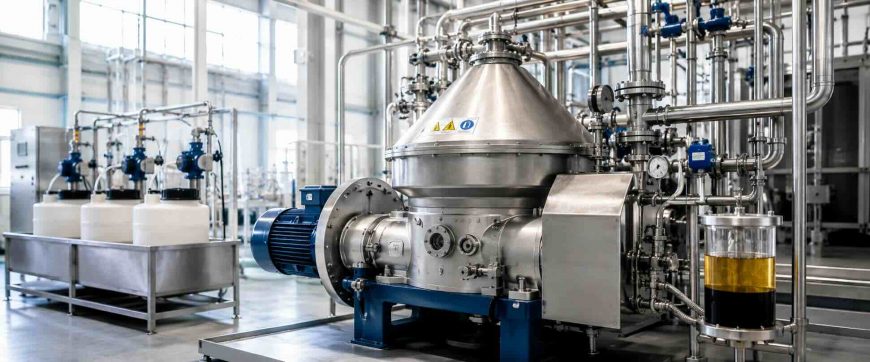
Neutralizing High-FFA Feedstocks: Engineering Flexible Refining Solutions
The growing availability of alternative vegetable oils and high-FFA feedstocks is reshaping edible oil refining. Neutralizing is becoming an increasingly important engineering operation as refineries need to process raw materials with different free fatty acid levels and impurity profiles while maintaining stable performance.
Rather than designing the process around a single oil, modern systems require flexibility. An adaptable refining configuration can help manufacturers manage changing feedstocks, optimize resource consumption and provide consistent conditions for downstream processing.
Neutralizing for Feedstock Variability
Every crude oil presents different refining characteristics. Free fatty acid content, impurities and overall feedstock quality can influence process requirements and operating conditions.
Modern neutralizing systems can be engineered to adjust key parameters according to these variations, allowing the plant to respond efficiently to different production campaigns.
Key objectives include:
- Adaptability to multiple feedstocks
- Flexible operating conditions
- Optimized chemical consumption
- Stable refining performance
- Improved production reliability
This approach allows feedstock variability to be managed as part of the plant design rather than treated as an operational limitation.
Engineering Efficient Process Control
Reliable operation depends on accurate control of the variables involved in the process. Chemical dosing, mixing conditions, temperature and separation performance must work together to achieve consistent results while limiting unnecessary product and resource losses.
Automation and process monitoring can support this balance by allowing operating parameters to respond to changes in incoming oil quality.
Process Flexibility Through Intelligent Plant Design
Flexible layouts and integrated automation allow refining systems to adapt more effectively to variations in crude oil composition. Instead of relying on repeated manual adjustments, process parameters can be managed as part of a coordinated production strategy.
An intelligently designed plant can support:
- Integrated automation
- Optimized process control
- Reduced operational variability
- Reliable downstream integration
- Scalable plant configurations
The objective is not simply to manage today’s feedstocks, but to create a refining system capable of responding to future production requirements.
Supporting Downstream Refining Performance
The effectiveness of neutralization also influences subsequent refining operations. Consistent treatment of the incoming oil helps create more stable conditions for downstream purification stages and contributes to reliable overall plant performance.
For this reason, the neutralizing section should be engineered as part of the complete refining line rather than considered an isolated processing step.
Designing for Long-Term Refinery Flexibility
Feedstock availability and market requirements continue to evolve. Refinineries designed to process only a narrow range of raw materials may therefore face operational limitations when production needs change.
Flexible engineering allows manufacturers to adapt processing conditions, accommodate different oil qualities and prepare existing facilities for future production scenarios without changing the entire refining philosophy.
Conclusion
Neutralizing is a strategic engineering operation for refineries processing increasingly diverse and high-FFA feedstocks. Flexible plant design, accurate process control and effective integration with downstream stages can help manufacturers maintain reliable operation while responding to changing raw material characteristics.
By engineering the process around feedstock variability, modern refineries can improve operational flexibility, control resource consumption and support consistent long-term refining performance.