
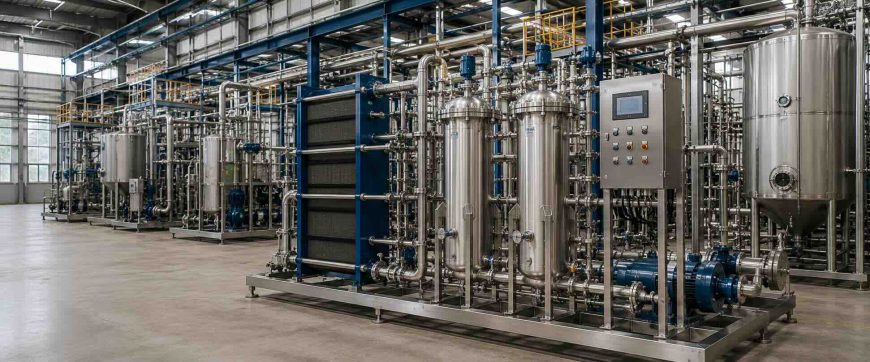
HVO Pre-treatment: Engineering Flexible Systems for Renewable Diesel Production
As renewable diesel production continues to expand worldwide, producers are increasingly processing Used Cooking Oil (UCO), animal fats, PFAD and other challenging feedstocks. Their variability makes HVO pre-treatment a strategic engineering process rather than a simple purification step.
A properly engineered pre-treatment line improves catalyst protection, operational reliability and overall plant efficiency, while preparing different raw materials for downstream hydrotreatment.
The Challenge Is Feedstock Variability
Modern renewable diesel plants must process raw materials with different contaminant profiles. Depending on their origin and quality, feedstocks may contain water, phosphorus, chlorides, soaps, gums, trace metals and suspended solids.
The objective of HVO pre-treatment is therefore not simply to remove individual contaminants, but to deliver a stable and suitable feedstock to the downstream process regardless of its origin.
Managing this variability effectively helps protect hydrotreatment units and supports consistent plant operation.
Engineering a Flexible HVO Pre-treatment System
Every project requires a dedicated engineering approach. Rather than applying a standard process configuration, the pre-treatment line should be designed according to feedstock characteristics, production capacity and catalyst requirements.
A flexible system allows producers to adapt operating conditions as raw materials change, helping maintain process efficiency and consistent feed quality without relying on a single fixed configuration.
More Than Contaminant Removal
An industrial pre-treatment line may integrate different technologies depending on the characteristics of the incoming feedstock.
These can include:
- Mechanical filtration
- Degumming
- Bleaching
- Drying
- Deacidification
- Customized contaminant-removal solutions
The appropriate combination depends on the feedstock and the requirements of the downstream process. This makes engineering and process integration central to the overall performance of the plant.
HVO Pre-treatment and Hydrotreatment Integration
An effective HVO pre-treatment system operates as an integrated part of the renewable diesel plant rather than as an isolated purification stage.
Stable feedstock quality can support catalyst lifetime, hydrogen consumption, maintenance intervals and overall process reliability. For this reason, the performance of the pre-treatment section should be considered in relation to the requirements of the downstream hydrotreatment unit.
Engineering both stages as part of a coordinated process helps create more stable operating conditions across the production line.
Designing for Future Feedstock Flexibility
Renewable diesel producers may need to process increasingly diverse raw materials as feedstock availability and market conditions evolve.
Designing flexibility into the plant from the beginning allows producers to respond to these changes without depending on extensive future modifications. Adaptable process configurations can therefore support both current production requirements and longer-term operational needs.
Conclusion
HVO pre-treatment has become a strategic engineering discipline for renewable diesel production. Plants designed to manage variable feedstocks efficiently are better positioned to protect downstream processes, maintain reliable operation and respond to changing raw material requirements.
By combining feedstock-specific engineering, flexible process configurations and effective integration with hydrotreatment, producers can improve plant performance while preparing their facilities for the evolving renewable diesel market.