
Logo
  • Home
  • About Us
    • Who we are
    • Our workshop
    • Engineering
    • Our Team
    • Our Offices
      • Branch Offices
      • Representative Offices
    • Our partners
  • Our Technologies
    • Oilseed Extraction
    • Oil Refining
    • Dry Fractionation Plant
    • Oleochemicals
    • Biodiesel
    • Waste Oil Pre-treatment
    • Lube Oil Re-refining
  • R & D
  • Our services
  • Plants
  • Media
    • News
    • Technoilogy Talks
    • Conferences & Exhibitions
    • Insights
    • Video
  • Contact us
image
  • Home
  • About Us
    • Who we are
    • Our workshop
    • Engineering
    • Our Team
    • Our Offices
      • Branch Offices
      • Representative Offices
    • Our partners
  • Our Technologies
    • Oilseed Extraction
    • Oil Refining
    • Dry Fractionation Plant
    • Oleochemicals
    • Biodiesel
    • Waste Oil Pre-treatment
    • Lube Oil Re-refining
  • R & D
  • Our services
  • Plants
  • Media
    • News
    • Technoilogy Talks
    • Conferences & Exhibitions
    • Insights
    • Video
  • Contact us
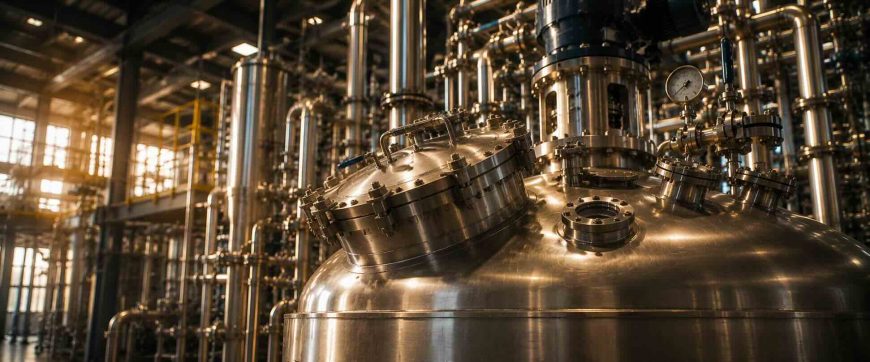
Esterification system for high-FFA biodiesel feedstocks
  • 3 Settembre 2026 by Arianna Mancini
  • Insights

Engineering High-FFA Feedstocks for Efficient Biodiesel Production

Engineering High-FFA Feedstocks for Efficient Biodiesel Production

Esterification plays a critical role as biodiesel producers increasingly turn to lower-grade feedstocks such as Used Cooking Oil (UCO), animal fats and acid oils to reduce raw material costs. While these alternatives can improve economic sustainability, they also introduce one of the main operational challenges in biodiesel production: high Free Fatty Acid (FFA) content.

Without an effective pretreatment process, elevated FFA levels can reduce biodiesel yield, increase soap formation during transesterification and negatively affect overall plant performance.

Today, this treatment is no longer simply a chemical reaction. It has become a strategic engineering solution that allows producers to process more challenging feedstocks while maintaining efficiency, product quality and operational reliability.

The Real Challenge Is Feedstock Variability

Not all feedstocks behave in the same way. FFA concentration, moisture, impurities and chemical composition can vary significantly depending on the origin of the raw material. A production line designed around one specific feedstock may struggle when processing another with completely different characteristics.

For this reason, the objective is not simply to reduce acidity, but to create a process capable of delivering consistent feed quality regardless of raw material variability. This is where process engineering becomes a competitive advantage.

Engineering Esterification Around the Feedstock

Rather than applying a standard process configuration, modern systems should be engineered around the characteristics of the incoming raw material.

Key engineering decisions include reactor sizing, residence time, alcohol dosing, catalyst selection, heat recovery and utility integration.

When these variables are correctly optimized, producers can:

  • Maximize FFA conversion efficiency.
  • Minimize chemical and energy consumption.
  • Improve process stability.
  • Prepare feedstocks for efficient downstream transesterification.

The objective is not simply to perform the reaction, but to ensure stable operation under changing production conditions.

Esterification and Downstream Process Performance

Reducing Free Fatty Acids is only one part of the equation.

A well-engineered esterification system contributes to the performance of the entire biodiesel plant by improving downstream processing, reducing operational disruptions and increasing production reliability.

This integrated approach allows manufacturers to achieve higher product quality while lowering long-term operating costs.

Instead of viewing this stage as an isolated operation, it should be considered an essential component of the complete biodiesel production strategy.

Designing Plants Ready for Tomorrow’s Feedstocks

Feedstock markets continue to evolve as renewable fuel demand grows. Tomorrow’s biodiesel plants must therefore be capable of processing raw materials that may not even be economically viable today.

For this reason, flexibility should be considered during the engineering phase rather than added later through plant modifications.

Modular layouts, adaptable process configurations and integrated engineering allow producers to respond to market changes while protecting long-term investments. This flexibility can also make it easier to manage variations in feedstock quality without compromising the stability of the overall production line.

Esterification as a Flexible Engineering Strategy

As the range of available raw materials expands, process adaptability becomes increasingly important. An engineered approach allows operating parameters to be adjusted according to feedstock conditions while maintaining consistent production targets.

By integrating reaction control, thermal management and downstream requirements within a single process strategy, producers can improve plant responsiveness and make more efficient use of equipment and utilities.

Conclusion

As biodiesel production becomes increasingly dependent on variable raw materials, esterification is evolving from a simple pretreatment step into a strategic engineering discipline.

Plants designed around feedstock variability rather than fixed operating conditions can achieve greater operational stability, improved efficiency and stronger long-term competitiveness.

Ultimately, the value of this process lies not only in reducing acidity, but in enabling industrial plants to handle a wider range of feedstocks with confidence, consistency and future-ready flexibility.

Insights

Navigazione articoli

prev article
next article
Categorie
  • Conferences & Exhibitions
  • Insights
  • News
  • Senza categoria
  • Technoilogy Talks

Who we are

TECHNOILOGY, a story of over 65 years of excellence and expertise. TECHNOILOGY is an international engineering company specialized in the design and manufacturing of plants for Edible Oils, Oleochemicals and Biodiesel production.
get in touch
Logo
  • China
  • Canada
  • Russia
  • Germany

Our News

  • TECHNOILOGY PARTNERS UP WITH MT IDEAS AMERICAS

    TECHNOILOGY is glad to announce a new strategic alliance for regional cooperation with MT Ideas Américas, a South American company specialized in the development of industrial plants for the food industry, especially for margarine and shortening. MT Ideas offers services of consulting, design and planning which ensures its customers complete solutions for their business. The company was established 27 years ago in Buenos Aires, Argentina, and relies on different branch offices in Central-South America and in the Carribbeans. “We are very happy to have formalized our alliance with MT Ideas as we have known each other for a very long time. Over the years we built a solid business relationship, centered on mutual cooperation in some international projects. Now with this new formal partnership, TECHNOILOGY gives to its customers the opportunity to extend their activities in complementary sectors, adding value to their Oils and Fats products and derivatives” declared Andrea Bernardini, Commercial Director of TECHNOILOGY. “For many years, we have specialized in the development of industrial plants for margarines and related oils and fats, automation and final packaging. Now that we joined forces with TECHNOILOGY our clients will benefit from a broader range of solutions, as they can add previous processes such as Extraction and Refining of raw materials”, commented Claudio Mendez, President of MT Ideas Americas.

    Read more
  • TECHNOILOGY is happy to announce the signing of a contract with global energy company CEPSA for the manufacturing of a Pre-treatment unit. This is the latest of several agreements signed by TECHNOILOGY with oil corporations that are moving towards renewable diesel Production. Among them, ENI, GALP and KPN Corporation 1 (list of all projects below). Cepsa and Bio-Oils biofuels’ project Cepsa and Bio-Oils, a subsidiary of major Indonesian vegetable oil processor Apical, celebrated on February 23rd the beginning of the construction of the largest second-generation biofuels plant in southern Europe. The facility, which will flexibly produce 500,000 tonnes of sustainable aviation fuel (SAF) and renewable diesel (hydrogenated vegetable oil or HVO) annually, will be located in Huelva, Spain, and will allow the joint venture formed by both companies to double its current production capacity, starting from 2026. TECHNOILOGY’s Pre-treatment process Huelva’s PTU – that will process UCO and other waste feedstocks – is one of the several PTU provided by TECHNOILOGY to global energy groups.    From 2020, the company finalized various contracts for the supply of Pre-Treatment units including its unique Organic Dechlorination process, the only process in the world capable of drastically mitigating organic Chlorine in the low-grade feedstocks commonly used by Oil Producers in HVO and SAF Production plants. “It took us several years of trials to develop our Organic Dechlorination process and we are now reaping the benefits of our work. Our extensive experience with 3rd generation Biodiesel plants allowed us to reach before others an exclusive know how in the field of waste feedstock Pre-treatment for HVO and SAF Production. And we won’t stop here. Considering the scarcity of waste oils and fats, we are also exploring the treatment of atypical waste feedstocks such as pyrolysis oil to offer new solutions to our customers” commented Andrea Bernardini, Commercial Director of TECHNOILOGY. Pre-treatment units supplied by TECHNOILOGY ENI – 2000 TPD PTU for HVO Production CEPSA – 1000 TPD PTU for Biofuels Production GALP – 1050 TPD PTU for HVO Production PRIO – 600 TPD for Biofuels Production KPN CORPORATION – 800 TPD PTU for HVO/SAF Production BARIUM SELAT/ LOKEN – 200 TPD for HVO/SAF Production

    Read more
  • The Transformative Journey of UCO Treatment

    In the pursuit of sustainability and environmental responsibility, the treatment of Used Cooking Oil (UCO) has become a focal point in the realm of waste management. This article delves into the innovative processes of UCO treatment, unveiling its significance and impact on creating a greener, more circular economy. UCO treatment involves the careful and systematic processing of used cooking oil, redirecting it from a waste stream to a valuable resource. The primary goal is to convert UCO into biodiesel, a cleaner and more sustainable alternative to traditional fossil fuels. Through methods like hydrotreating and transesterification, UCO is refined to meet stringent quality standards, making it a viable source for eco-friendly energy. The benefits of UCO treatment extend beyond fuel production; it mitigates environmental hazards associated with improper disposal, reducing pollution and promoting a circular economy. As industries worldwide embrace the principles of sustainability, UCO treatment emerges as a key player in reducing carbon footprints and promoting a more responsible approach to waste management. In the global shift towards a sustainable future, UCO treatment stands as a beacon of innovation, turning waste into a valuable resource. As industries increasingly recognize the potential of UCO as a renewable energy source, the journey from discarded cooking oil to cleaner, greener biodiesel becomes a testament to the transformative power of responsible waste management.

    Read more

Contacts

TECHNOILOGY S.r.l.

OPERATIVE: Via D. Federici, 12/14 04012 Cisterna di Latina (LT) – Italy 

Tel./Fax: +39 06 9696181
Mail: [email protected]

A story of over 70 years of excellence and expertise.

TECHNOILOGY is an international engineering company specialized in the design and manufacturing of plants for Edible Oils, Oleochemicals and Biodiesel production.

LEGAL: Viale F. T. Marinetti, 221 00143 Roma – Italy P.IVA IT13633591006 © ; 2022 Technoilogy. All rights reserved.
Gestisci Consenso Cookie
Per fornire le migliori esperienze, utilizziamo tecnologie come i cookie per memorizzare e/o accedere alle informazioni del dispositivo. Il consenso a queste tecnologie ci permetterà di elaborare dati come il comportamento di navigazione o ID unici su questo sito. Non acconsentire o ritirare il consenso può influire negativamente su alcune caratteristiche e funzioni.
Funzionale
Sempre attivo
L'archiviazione tecnica o l'accesso sono strettamente necessari al fine legittimo di consentire l'uso di un servizio specifico esplicitamente richiesto dall'abbonato o dall'utente, o al solo scopo di effettuare la trasmissione di una comunicazione su una rete di comunicazione elettronica.
Preferenze
L'archiviazione tecnica o l'accesso sono necessari per lo scopo legittimo di memorizzare le preferenze che non sono richieste dall'abbonato o dall'utente.
Statistiche
L'archiviazione tecnica o l'accesso che viene utilizzato esclusivamente per scopi statistici. L'archiviazione tecnica o l'accesso che viene utilizzato esclusivamente per scopi statistici anonimi. Senza un mandato di comparizione, una conformità volontaria da parte del vostro Fornitore di Servizi Internet, o ulteriori registrazioni da parte di terzi, le informazioni memorizzate o recuperate per questo scopo da sole non possono di solito essere utilizzate per l'identificazione.
Marketing
L'archiviazione tecnica o l'accesso sono necessari per creare profili di utenti per inviare pubblicità, o per tracciare l'utente su un sito web o su diversi siti web per scopi di marketing simili.
Gestisci opzioni Gestisci servizi Gestisci fornitori Per saperne di più su questi scopi
Visualizza le preferenze
{title} {title} {title}